Federal Update Sept 4

ImageAmbassador Deborah Birx (White House Coronavirus Task Force Coordinator): Dr. Birx highlighted her recent travel in Iowa, North Dakota, Illinois, and Minnesota where she met with State, local, and Tribal leaders on COVID-19 response and recovery. Dr. Birx noted that we are seeing positive trends nationwide, including a 35 percent decline in hospitalizations and cases since the peak 4-5 weeks ago. We are also seeing declines in mortalities, which is an important lagging indicator. Dr. Birx noted that the majority of cases we are seeing is through community/family gatherings and she emphasized the importance of colleges and universities having robust testing and contact tracing plans in place given the recent spikes in case positivity rates we are seeing in college and university towns across the country. 

Admiral Brett Giroir (Assistant Secretary of Health, U.S. Department of Health and Human Services): ADM Giroir provided an update on the Federal government’s efforts to scale testing and support States, Tribes, and Localities across the country. This includes the recent surge of Federal testing support and personnel to Phoenix, Arizona (Pima County) and Honolulu, Hawaii. ADM Giroir highlighted the Trump Administration’s recent announcement regarding the purchase and production of 150 million rapid tests to be distributed across the country. He also gave an overview of the Administration’s recent actions to protect our nation’s seniors by strengthening COVID-19 surveillance with new testing requirements for nursing homes and other providers. The Administration continues to surge resources to our Nation’s nursing homes – including having already shipped over 2 million point-of-care tests and over 5,600 point-of-care machines to the highest risk nursing homes (read more here). The Administration is also distributing $5 billion more in Provider Relief Funds for nursing homes – the first $2.5 billion of these funds will be distributed to help nursing homes cover testing, PPE, and staffing expenses.

Ted McKinney (Under Secretary, U.S. Department of Agriculture): Undersecretary McKinney detailed the USDA’s work to care for all Americans from the food supply chain to feeding America’s children with the latest programs while supporting America’s farmers.

Jim Carroll (Director, Office of National Drug Control Policy – ONDCP): Monday, August 31st marked International Overdose Awareness Day. To mark the occasion, ONDCP joined our Federal partners at the Department of Health and Human Services (HHS) and the Centers for Disease Control (CDC) to unveil an infographic explaining to first responders how they can safely administer naloxone during the COVID-19 pandemic. As naloxone is frequently administered nasally, concerns about possible COVID-19 transmission while employing the life-saving drug caused understandable unease among some police, EMTs, and others. The infographic explains in straightforward fashion how reasonable precautions can ensure naloxone can be administered without fear of contracting COVID-19 in the critical moments immediately following an overdose.  Please share this naloxone guidance during the COVID-19 pandemic with all of your first responders.
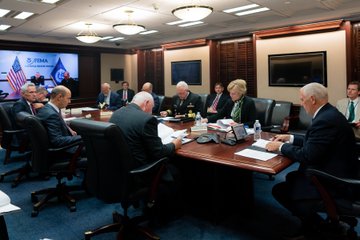
ImageKeith Turi (Assistant Administrator for Recovery, Federal Emergency Management Agency): Turi discussed new interim guidance from FEMA that clarifies eligible work under the Public Assistance program as part of the response to COVID-19. The interim policy defines the framework, details and requirements for eligibility of work and costs under the Public Assistance Program to ensure consistent and appropriate implementation across all COVID-19 emergency and major disaster declarations.  Only work associated with the performance of emergency protective measures specifically listed in this policy is eligible for Public Assistance in COVID-19-declared events. The interim policy is applicable to eligible applicants only and is exclusive to emergency and major disaster declarations for the COVID-19 pandemic. The guidance applies to work performed on or after September 15, 2020.

Update on Trump Administration’s Operation Warp Speed

On August 31, President Trump provided an update on Operation Warp Speed announcing that a Phase III clinical testing of AstraZeneca’s Coronavirus vaccine candidate has begun. The trial will enroll approximately 30,000 adult volunteers at 80 sites in the United States to evaluate if the candidate vaccine can prevent symptomatic coronavirus disease 2019 (COVID-19).
Image

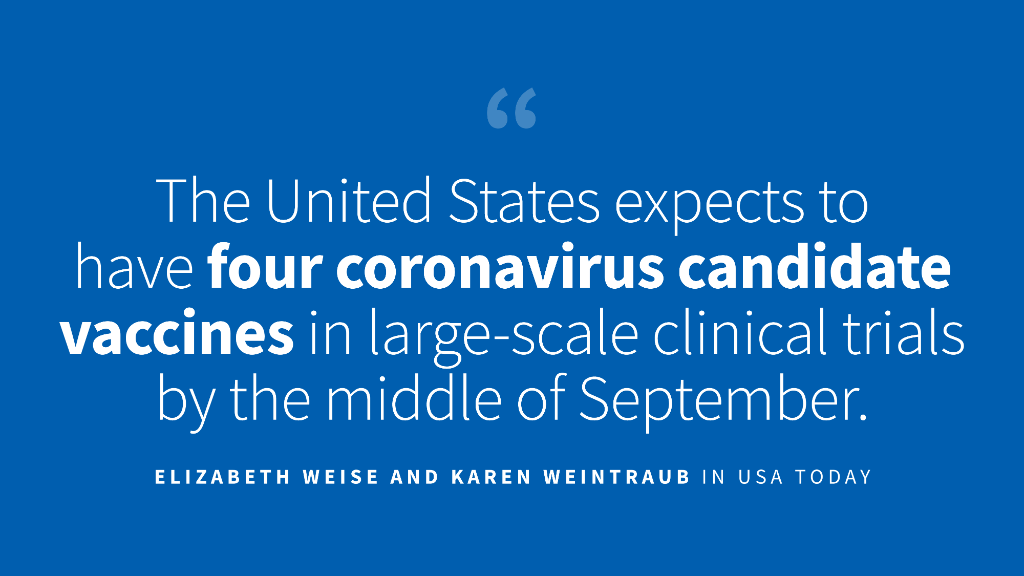
In total, three Operation Warp Speed-supported candidates are in Phase 3 trials in the United States, and more are expected to enter United States Phase 3 trials by the end of September.

Secretary Alex Azar: How We’re Developing a COVID-19 Vaccine at ‘Warp Speed’

About Operation Warp Speed: On May 15, President Trump announced the launch of Operation Warp Speed (OWS) to deliver safe and effective coronavirus treatments and vaccines as quickly as possible. OWS aims to begin delivery of 300 million doses of an FDA authorized, safe and effective vaccine for COVID-19 by the end of the year as part of a broader strategy to accelerate the development, manufacturing, and distribution of COVID-19 vaccines, therapeutics, and diagnostics. OWS is a partnership among components of the Department of Health and Human Services and the Department of Defense, engaging with private firms and other federal agencies, and coordinating among existing HHS-wide efforts, including the NIH’s Accelerating COVID-19 Therapeutic Interventions and Vaccines (ACTIV) partnership, NIH’s Rapid Acceleration of Diagnostics (RADx) initiative, and work by the Biomedical Advanced Research and Development Authority within the HHS Office of the SAssistant Secretary for Preparedness and Response. Find a helpful Fact Sheet here

The Vice President’s Briefing with Higher Education Leaders and State and Local Officials on Campus COVID-19 Considerations

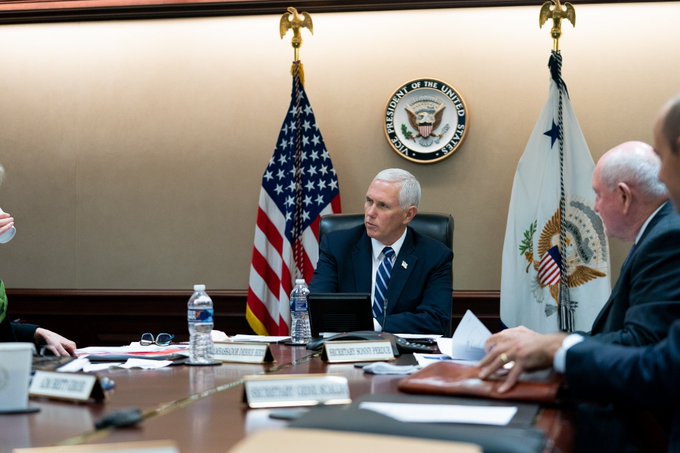
On Friday, August 4, Vice President Mike Pence led a discussion with college presidents, State and local leaders, the Secretary of Education, and members of the White House Coronavirus Task Force to brief them on the principles contained in the recently released “Recommendations for College Students.” These principles are intended to keep schools open while mitigating community spread.

The Vice President highlighted a number of states and institutions that have taken innovative and collaborative approaches to return students to their campuses. For example: Colorado State University is using surveillance testing to monitor the potential spread of COVID-19 and the University of Notre Dame quickly and efficiently dealt with an outbreak on campus. The Vice President also emphasized the importance of keeping our schools open and students on or near campus, and praised the efforts of all essential workers who have made school reopening possible, including teachers.

READ MORE: Readout from the Vice President’s Briefing with Higher Education Leaders and State and Local Officials on Campus COVID-19 Considerations

CDC Guidance for Schools & Higher Education Institutions Reopening
The CDC has released science-based resources and tools for school administrators, teachers, parents, guardians, and caregivers when schools open this fall. The CDC discusses the importance of reopening America’s schools this fall here noting that “as families and policymakers make decisions about their children returning to school, it is important to consider the full spectrum of benefits and risks of both in-person and virtual learning options.” As noted previously by CDC Director Redfield, the CDC is able to provide technical assistance to any State, school district, or school. Please let us know if you have any interest.

  • K-12 Schools Guidance & Considerations here.
  • Higher Education Institutions Guidance & Considerations here.
  • White House Coronavirus Task Force Recommendations for College Students here.

American Academy of Pediatrics (AAP) COVID-19 Planning Considerations – Guidance for School Re-entry: Full Guidance here.
Posted in Uncategorized | Leave a comment

Evictions and federal aid – Sept. 4 Update

Eviction Relief

Following an Executive Order by President Trump, today the Centers for Disease Control and Prevention (CDC) issued an order to temporarily halt evictions through the end of 2020 in an effort to slow the spread of COVID-19. Under the CDC Order, American renters who meet certain conditions cannot be evicted if they have affirmatively exhausted their best efforts to pay rent, seek Government rental assistance, and are likely to become homeless due to eviction. More information can be found here.

  • HUD allocated $7 billion in grants to State and local governments that can be used for rental assistance to address increased eviction risk.
  • HUD is explicitly considering factors associated with eviction risk when allocating nearly $2 billion in CARES Act funding and working with Federal grant recipients to facilitate their use of various funds to assist renters at risk of eviction.
  • HUD is providing housing counseling services and has published resources and guidance to help tenants, landlords, and lenders, including a toolkit to help landlords and public housing authorities work with their tenants during this time.
  • The Department of the Treasury has also allocated $142 billion in Coronavirus Relief Funds to States and localities, with broad application for rental assistance and other programs.

Small Business Assistance

SBA Express Bridge Loans: Express Bridge Loan Pilot Program allows small businesses who currently have a business relationship with an SBA Express Lender to access up to $25,000 quickly. These loans can provide vital economic support to small businesses to help overcome the temporary loss of revenue they are experiencing and can be a term loans or used to bridge the gap while applying for a direct SBA Economic Injury Disaster loan. If a small business has an urgent need for cash while waiting for decision and disbursement on an Economic Injury Disaster Loan, they may qualify for an SBA Express Disaster Bridge Loan.

SBA Debt Relief: As part of our coronavirus debt relief efforts, the SBA will pay 6 months of principal, interest, and any associated fees that borrowers owe for all current 7(a), 504, and Microloans in regular servicing status as well as new 7(a), 504, and Microloans disbursed prior to September 27, 2020. This relief is not available for Paycheck Protection Program loans or Economic Injury Disaster loans. More information can be found below:

Donate COVID-19 Plasma

  • If you have fully recovered from COVID-19, you may be able to help patients currently fighting the infection by donating your plasma. Because you fought the infection, your plasma now contains COVID-19 antibodies. These antibodies provided one way for your immune system to fight the virus when you were sick, so your plasma may be able to be used to help others fight off the disease. Learn more here.
  • To find where you can donate source plasma, visit donatingplasma.org.

Donate Blood

  • The COVID-19 pandemic has caused unprecedented challenges to the U.S. blood supply. Donor centers have experienced a dramatic reduction in donations due to the implementation of social distancing and the cancellation of blood drives. Blood is needed every day to provide lifesaving treatments to a variety of patients. You can help ensure that blood continues to be available for patients by finding a blood donor center near you to schedule your donation. Learn more here.
  • To find where you can donate blood, visit aabb.org.

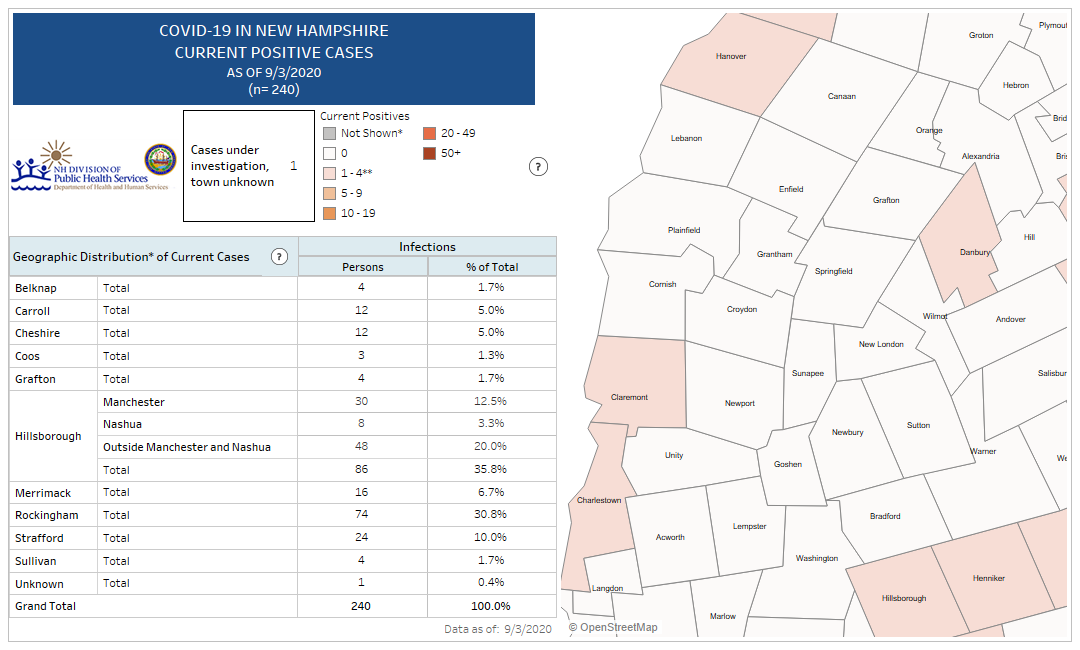
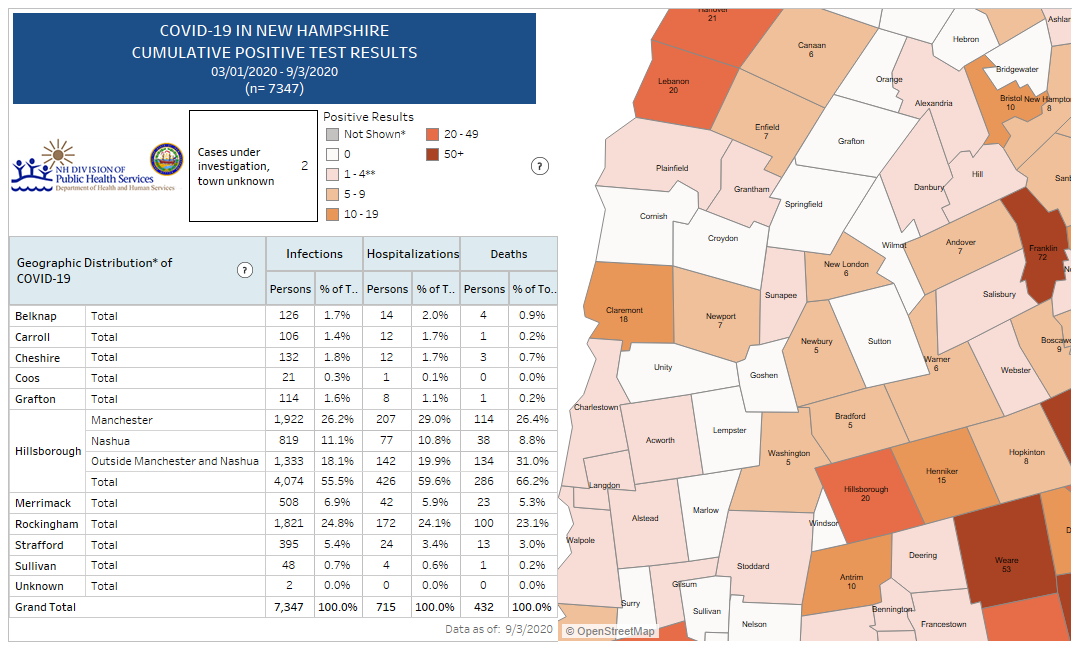
New Hampshire 2019 Novel Coronavirus (COVID-19) Summary Report

(data updated as of September 3, 2020, 9:00 AM)

Number of Persons with COVID-19 1 7,347
Recovered 6,675 (91%)
Deaths Attributed to COVID-19 432 (6%)
Total Current COVID-19 Cases 240
Persons Who Have Been Hospitalized for COVID-19 715 (10%)
Current Hospitalizations 10
Total Persons Tested at Selected Laboratories, Polymerase Chain Reaction (PCR)2 215,875
Total Persons Tested at Selected Laboratories, Antibody Laboratory Tests2 29,925
Persons with Specimens Submitted to NH PHL 42,704
Persons with Test Pending at NH PHL3 79
Persons Being Monitored in NH (approximate point in time) 1,725

1 Includes specimens positive at any laboratory and those confirmed by CDC confirmatory testing.
2 Includes specimens tested at the NH Public Health Laboratories (PHL), LabCorp, Quest, Dartmouth-Hitchcock Medical Center, and those sent to CDC prior to NH PHL testing capacity.
3 Includes specimens received and awaiting testing at NH PHL. Does not include tests pending at commercial laboratories.

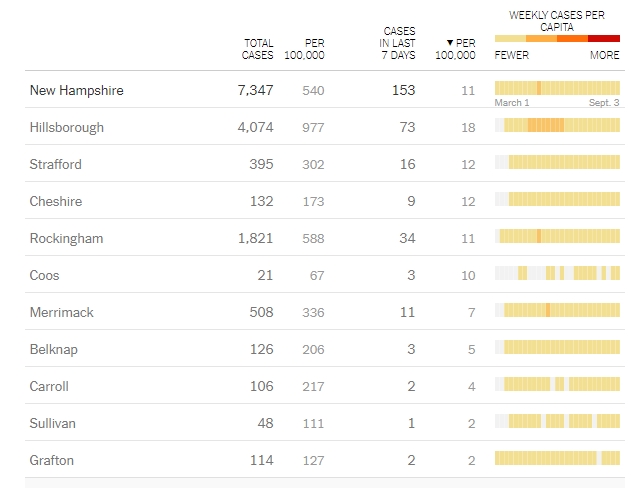
At least 38 new cases were reported in New Hampshire on Sept. 3. Over the past week, there have been an average of 22 cases per day, an increase of 19 percent from the average two weeks earlier.

Posted in Uncategorized | Leave a comment

School Dashboard, CDC guidance – Sept 3 Update

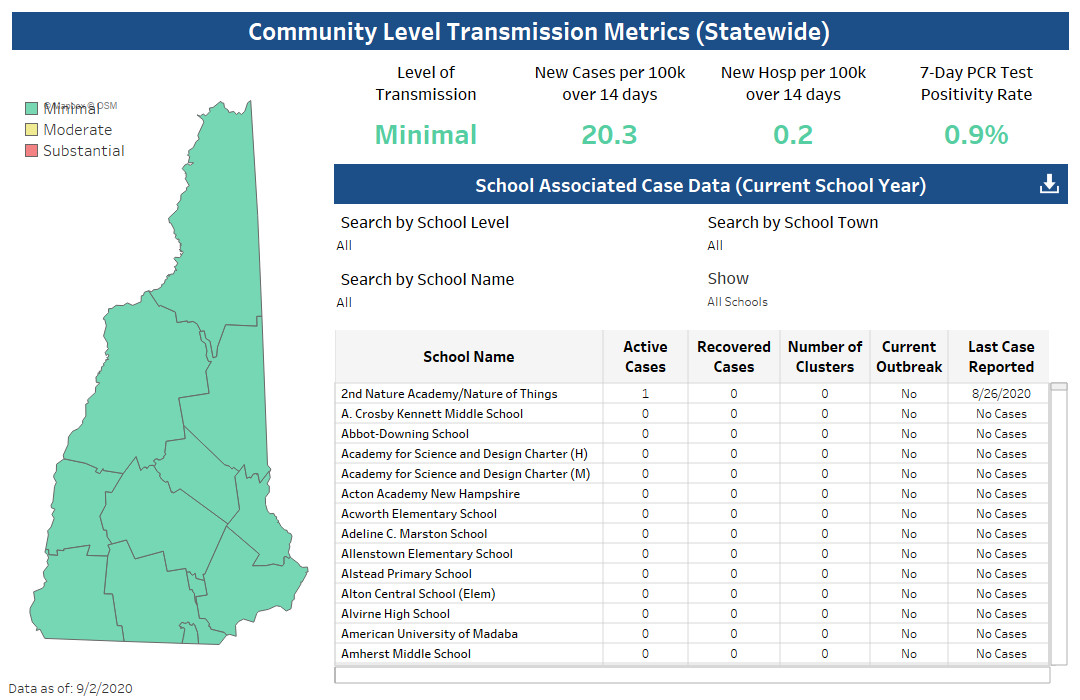
School Tracking Dashboard

COVID-19 schools dashboard is now live. This centralized website lists every school across NH with information on the number of cases within the schools, if there are clusters of illness, and if the school has reached an outbreak status. It allows you to search by school name, town, etc. View here:

https://www.nh.gov/covid19/dashboard/schools.htm

Governor Sununu

Today we’re announcing that the state is set to receive an additional 230,000 cloth face coverings from @HHSGov, on top of the 100,000 coverings that have already been distributed by the @NHNationalGuard. These face coverings will go directly to schools across the Granite State.

CDC tells states: Be ready to distribute vaccines on Nov. 1

Associated Press – “CDC urgently requests your assistance in expediting applications for these distribution facilities and, if necessary, asks that you consider waiving requirements that would prevent these facilities from becoming fully operational by November 1, 2020,” Redfield wrote.” – More at AP News

Coronavirus Update: N.H. Releases New Guidance for Schools, Launches COVID-19 Schools Dashboard

https://www.nhpr.org/post/coronavirus-update-nh-releases-new-guidance-schools-launches-covid-19-schools-dashboard

State issues new guidance on tracking COVID-19 in schools

https://www.sentinelsource.com/news/local/state-issues-new-guidance-on-tracking-covid-19-in-schools/article_49c2f47a-bc51-513c-bc02-c07cf9465f0c.html

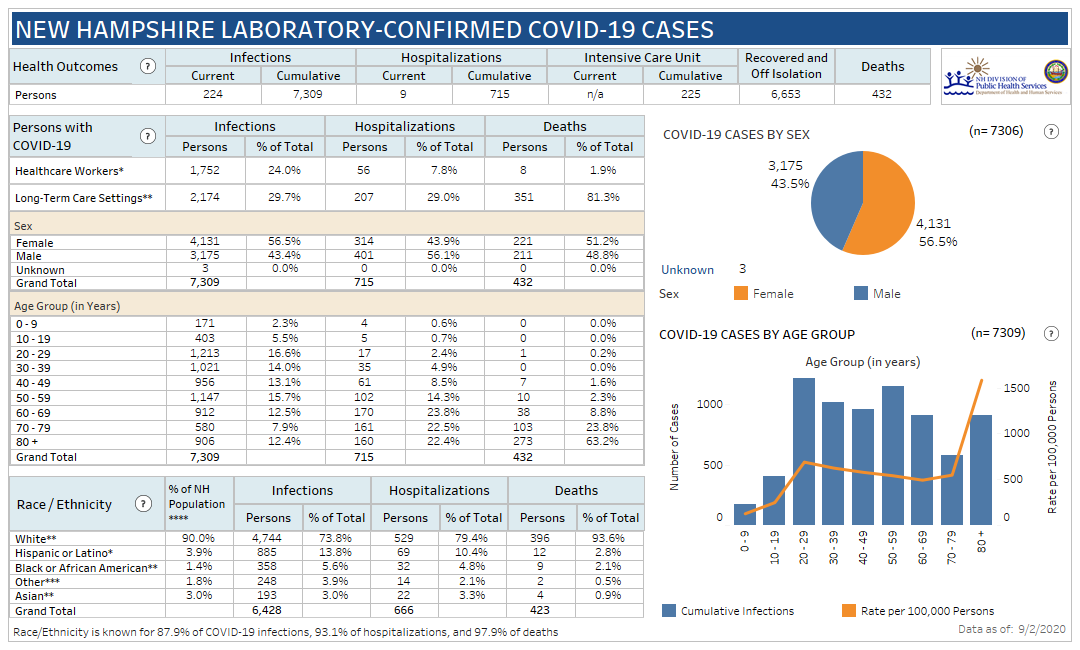
New Hampshire 2019 Novel Coronavirus (COVID-19) Summary Report

(data updated as of September 2, 2020, 9:00 AM)

Number of Persons with COVID-19 1 7,309
Recovered 6,653 (91%)
Deaths Attributed to COVID-19 432 (6%)
Total Current COVID-19 Cases 224
Persons Who Have Been Hospitalized for COVID-19 715 (10%)
Current Hospitalizations 9
Total Persons Tested at Selected Laboratories, Polymerase Chain Reaction (PCR)2 211,281
Total Persons Tested at Selected Laboratories, Antibody Laboratory Tests2 29,761
Persons with Specimens Submitted to NH PHL 42,579
Persons with Test Pending at NH PHL3 275
Persons Being Monitored in NH (approximate point in time) 1,625

Cumulative Positive Tests by County

  • Belknap 125
  • Carroll 105
  • Cheshire 131
  • Coos 19
  • Grafton 114
  • Hillsborough – Other 1,323
  • Hillsborough – Manchester 1913
  • Hillsborough – Nashua 816
  • Merrimack 504
  • Rockingham 1817
  • Strafford 391
  • Sullivan 48

At least 12 new cases were reported in New Hampshire on Sept. 2. Over the past week, there have been an average of 21 cases per day, about the same as the average two weeks earlier.

As of Thursday afternoon, there have been at least 7,309 cases and 432 deaths in New Hampshire since the beginning of the pandemic, according to a New York Times database.

Posted in Uncategorized | Leave a comment