Department of Homeland Security (DHS)
· DHS Supporting States and Local Governments to Keep Communities Safe: As a department with numerous law enforcement and intelligence capabilities, DHS is taking action to prevent, respond to, and mitigate civil unrest in the United States at the National, State, and local levels. DHS is providing local and State law enforcement with intelligence, information and surveillance assets to track these groups instigating the violence. DHS has also deployed CBP and ICE law enforcement officers to assist partners on the ground. DHS continues to work alongside together federal agencies and the President to restore peace to our streets and neighbors. Contact DHS Intergovernmental Affairs for resources at dhs.iga@hq.dhs.gov and learn more about the Homeland Security Grant Program here.
· DHS Cyber Security and Infrastructure Security Agency (CISA) Providing Support to State and local Governments: DHS CISA continues to provide support to State and local governments across the country who are responding to the COVID-19 pandemic and current events. On May 29, CISA released the first of six “Cyber Essentials” toolkits to assist State and local officials and private sector stakeholders in establishing a “culture of cyber readiness” that will lead to security investments, risk awareness, and collaboration with trusted third parties. The first of these toolkits is focused on how small businesses can set the right tone for their organization and work with their staff to develop the right policies. Future documents will address asset protection, access control, the importance of backups and incident response and recovery. Also, on May 15, CISA published guidance for 911 centers regarding pandemics. The guidelines aim to assist public safety partners across all levels of government when developing plans and actions regarding governance, procedures, staffing, and cleaning and disinfecting in response to a pandemic.
Department of Justice (DOJ)
· DOJ Providing Support to State and Local Governments to Keep Communities Safe: As stated by Attorney General Bill Barr, “The greatness of our nation comes from our commitment to the rule of law. The outrage of our national community about what happened to George Floyd in Minneapolis is real and legitimate. Accountability for his death must be addressed, and is being addressed, through the regular process of our criminal justice system, both at the state and at the federal level.” To support State and local governments in maintaining order, all DOJ components have contributed manpower and members of federal workforce have been deputized to allow them to provide peacekeeping functions.
· DOJ Activates Joint Terrorism Task Forces: DOJ has also responded by activating the existing network of 56 regional FBI Joint Terrorism Task Forces to identify criminal organizers and instigators and to coordinate federal resources with our state and local partners. The JTTFs are well-suited to this task because they combine intelligence and operational resources and federal and local law enforcement. All JTTF command centers are currently operating on a 24/7 basis. Collaboration with operations and intelligence sharing is critical to disrupting the radicalization of violence we continue to see across the country aimed at civilians, peaceful protesters and the law enforcement community. DOJ and the Administration want mayors to have the conviction to request and utilize all available resources at the State, local and federal level to combat violence and best protect the members of our communities across the country.
· Additional Information and Resources
· The President’s Commission on Law Enforcement and the Administration of Justice to ensure trust and accountability of law enforcement in all communities
· Office of Justice Programs
· Office of Community Oriented Policing Services (COPS)
· Grants for State and local law enforcement
Federal Bureau of Investigation (FBI)
· FBI Providing Support to State, Local, and Federal Law Enforcement Partners: The FBI is supporting State, local, and Federal law enforcement partners with maintaining public safety in the communities they serve. Efforts are focused on identifying, investigating, and disrupting individuals that are inciting violence and engaging in criminal activity. The FBI has stood up 24-hour command posts in each of 56 field offices, as well as a national command post at FBI Headquarters. FBI is supporting with personnel resources upon the request of law enforcement partners. FBI has set up locally based intelligence teams to gather information about criminal activity and violent actors. FBI is soliciting tips, leads, and video regarding criminal activities via the National Threat Operations Center (NTOC). FBI is sharing threat information with partners so to anticipate where law enforcement attention will be needed to ensure the safety of our communities.
Department of Defense (DOD)
· DOD Providing Support to State and Local Governments: Through the National Guard Bureau, the Department of Defense is helping State and local governments respond to COVID-19 and keep communities safe. The National Guard is part of the communities and is prepared to assist law enforcement in keeping communities safe. To date, 31 state Governors have called up about 30K National Guardsmen in support of the response to protests. This is in addition to the 40K National Guardsmen and women who are providing support in response to the COVID-19 pandemic. The number surpasses the more than 51,000 Guard members activated after Hurricane Katrina struck the Gulf Coast in 2005, which was the Guard’s largest previous domestic response in recent years. Learn more here.
II. COVID-19 Response and Recovery
COVID-19 Guidance & Resources
Reopening Guidance and Resources: President Trump and the White House Coronavirus Task Force unveiled Guidelines for Opening Up America Again, a three-phased approach based on the advice of public health experts. These steps will help state and local officials when reopening their economies, getting people back to work, and continuing to protect American lives. Please click here for more information: Guidelines for Opening Up America Again
· Testing Overview (here)
· Testing Blueprint (here)
· Guidance for Cleaning and Disinfecting Public Spaces, Workplaces, Businesses, Schools and Homes (here)
· CDC guidance for Camps, Child Care Programs, Schools, Mass Transit, Restaurants And Bars, and Workplaces.
· CDC Activities and Initiatives Supporting the COVID-19 Response and the President’s Plan for Opening America Up Again (here)
CDC Contact Tracing Resources: Below, find helpful contact tracing information and resources for State, local, and Tribal governments.
· COVID-19 Contact Tracing Training: Guidance, Resources, and Training Plan (here)
· COVID-19 Principles of Contact Tracing Booklet (here)
· Health Departments Interim Guidance on Developing a COVID-19 Case Investigation & Contact Tracing Plan (here)
· Principles of Contact Tracing: CDC’S Basic Principles of Contact Tracing to Stop COVID-19 Transmission (here)
· Preliminary Criteria for the Evaluation of Digital Contact Tracing Tools for COVID-19 (here)
· Digital Contact Tracing Tools for COVID-19 (here)
· Community-Based Testing Sites: HHS has partnered with pharmacy and retail companies to accelerate testing for more Americans in more communities across the country. This includes helping stand-up more than 300 community-based testing sites in 44 states. Learn more and find a community-based testing site near you here.
· Funding and Other Resources: HHS and CDC continue to provide States, Tribes, and local governments with important resources to support testing and contact tracing efforts. This includes $11 B announced on May 11. More information about CDC’s ongoing support to States here.
Testing & PPE: Below, find helpful testing information and resources from HHS, the Food & Drug Administration and other federal agency partners.
· FDA Approved Tests: To date, the FDA has authorize 119 tests under EUAs, which includes 103 molecular tests, 15 antibody tests, and 1 antigen test. You can find the full list here.
· Public-Private Partnership on Community-Based Testing Sites: HHS has partnered with pharmacy and retail companies to accelerate testing for more Americans in more communities across the country. More details here.
· U.S. Department of Health & Human Services (HHS) is delivering $11 billion in new funding to support expanded testing capacity for States, territories, and tribes. More information here and you can find the State-by-State breakdown here.
· Primer on Testing Basics: The FDA issued a Consumer Update, Coronavirus Testing Basics, to provide information about the different types of tests available and the steps involved in obtaining results. More details here.
· Swab & Media Options: You can find swab and transport media option and flexibilities here.
· Increase Payment for High-Production Coronavirus Lab Tests: CMS announced Medicare is doubling payment for certain lab tests that use high-throughput technologies to rapidly diagnose large numbers of COVID-19 cases. Additional information here. CMS also pays for COVID-19 specimen collection (additional information here).
· Reminder – FDA Delegates Authority to States: On March 16, the FDA put in place a policy for states to take responsibility for tests developed and used by laboratories in their states. States can set up a system in which they take responsibility for authorizing such tests and the laboratories will not engage with the FDA. This includes expanding swab options as Colorado as done. More information here.
· Additional Testing Resources: FDA Frequently Asked Questions (FAQ).
Centers for Medicare & Medicaid Services (CMS)
Protecting Nursing Home Residents and Workers: This week, CMS sent a letter from Administrator Verma & CDC Director Robert Redfield to every Governor from regarding the National Healthcare Safety Network for America’s Medicaid and Medicare-certified nursing homes. As we look ahead to re-open America, CMS and CDC are taking action and urging States to keep nursing home residents safe by focusing testing on nursing homes and other vulnerable populations. States were provided detailed information regarding State-specific data reported from nursing homes. You can find additional information, including guidance around infection control and best practices to protect nursing home residents, here. To protect some of our nation’s most vulnerable citizens, the Trump Administration is taking the following actions:
· CMS is increasing penalties for noncompliance with longstanding infection control requirements.
· CMS is ensuring States conduct necessary surveys of nursing homes by tying survey funding to State Survey Agency performance.
· CMS is continuing the deployment of its network of Quality Improvement Organizations to provide an array of assistance and work with governors to target assistance to facilities that have experience outbreaks.
· CDC is assessing and providing guidance and technical assistance to improve infection control practices to nursing homes and State health departments.
CMS Issues Nursing Homes Best Practices Toolkit to Combat COVID-19: On May 13, under the direction of President Trump, CMS released a new toolkit developed to aid nursing homes, Governors, states, departments of health, and other agencies who provide oversight and assistance to these facilities, with additional resources to aid in the fight against the coronavirus disease 2019 (COVID-19) pandemic within nursing homes. The toolkit builds upon previous actions taken by the Centers for Medicare & Medicaid Services (CMS), which provide a wide range of tools and guidance to states, healthcare providers and others during the public health emergency. More here.
CMS Unveils Enhanced Enforcement Actions Based on Nursing Home COVID-19 Data and Inspection Results: On June 1, CMS unveiled enhanced enforcement for nursing homes with violations of longstanding infection control practices. This announcement builds on the previous actions CMS has taken to ensure the safety and security of America’s nursing homes as the nation battles coronavirus disease 2019 (COVID-19), and is a key step in the Trump Administration’s Guidelines for Opening Up America Again. The enhanced and targeted accountability measures are based on early trends in the most recent data regarding incidence of COVID-19 in nursing homes, as well as data regarding the results of the agency’s targeted infection control inspections. CMS is increasing enforcement (e.g., civil money penalties (CMPs)) for facilities with persistent infection control violations, and imposing enforcement actions on lower level infection control deficiencies to ensure they are addressed with increased gravity.

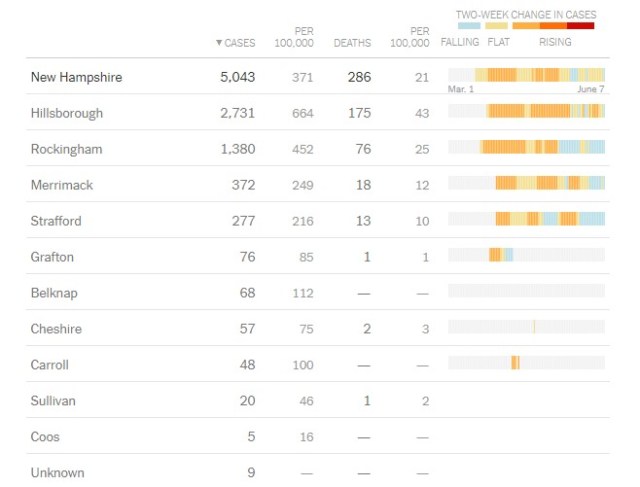
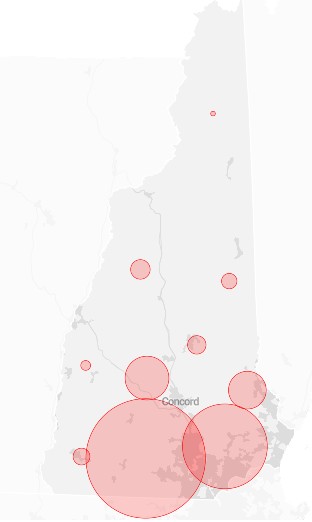

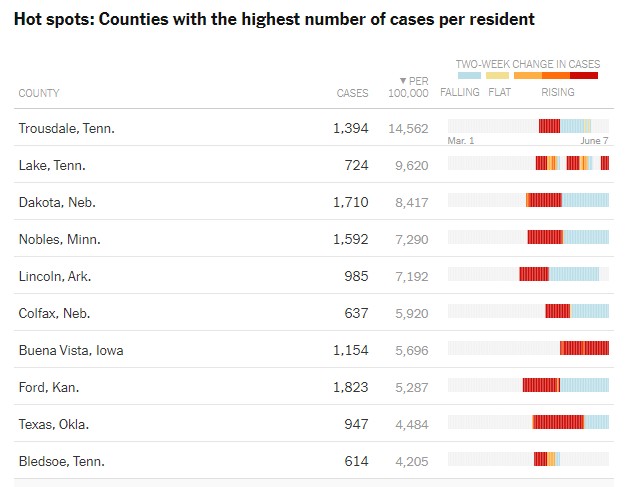

 Here are some key actions occurring at the federal level. Monitoring these is important as we ensure that New Hampshire’s needs are included. Not every solution works for every state. ~ Steve






 NH State Representative Steven Smith
You must be logged in to post a comment.